
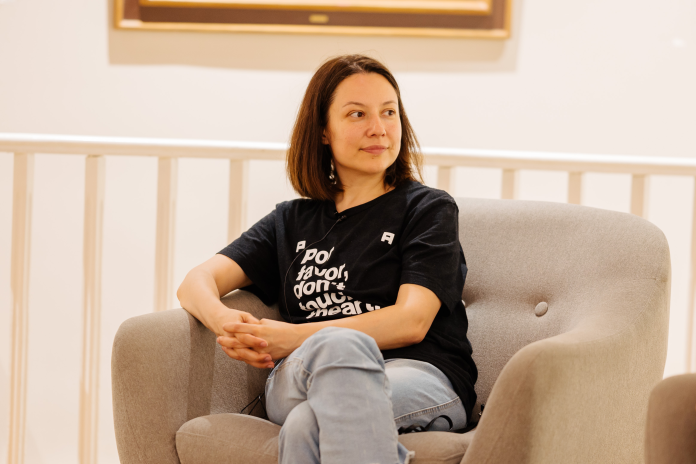
Kostiantyn Doroshenko
In November 2025, Ukraine’s Ministry of Culture presented the Ukrainian Cultural Heritage Fund (UCHF) as “a platform for restoring culture as a foundation of identity and democracy.” Registered in Brussels, the Fund works to consolidate international support for the preservation, rescue, and restoration of Ukraine’s cultural institutions and heritage sites threatened by Russian aggression.
In July 2026, Oleksandra Kovalchuk became the Executive Director of the Ukrainian Cultural Heritage Fund. She has worked in cultural management for ten years. Her professional experience includes leading the NGO Museum for Change, which supports Ukrainian museums during the war; reforming the Odesa National Fine Arts Museum as its Deputy Director; and serving on the board of the Ukrainian National Committee of the International Council of Museums (ICOM).
How did the concept and structure of the Ukrainian Cultural Heritage Fund take shape?
This is a somewhat unusual story for Ukraine, about how the professional community, Ukraine’s Ministry of Culture, and international partners managed to develop a shared vision. The idea for the Ukrainian Cultural Heritage Fund (UCHF) emerged from a very simple realization: Ukraine cannot cope with the scale of destruction of its cultural heritage on its own. And it is not just about money. We need a system that can unite the efforts of Ukraine and its international partners while responding quickly to damage and threats to cultural heritage.
Imagine a museum damaged by a missile strike. It urgently needs materials to protect its collection, cover broken windows, and temporarily repair its roof. It needs specialists to assess the damage and funding to stabilize and conserve the building. Not a year later, not after a grant competition, but here and now. Importantly, the idea for the Fund came from the Ukrainian cultural community’s honest answer to a question it asked itself: what can we do on our own, without waiting for help from government or international institutions? This became possible when Ukrainian cultural heritage experts came together to examine existing problems and propose solutions for the Culture Strategy 2025–2030.
The project was called RES-POL. The cultural heritage cluster was coordinated by Olha Sahaidak, Chair of the Coalition of Cultural Actors. I was responsible for movable cultural heritage within this cluster. It was during this project that the idea of the Ukrainian Cultural Heritage Fund emerged. We proposed it as one of the solutions, and the team at the Ministry of Culture, which had commissioned the project, selected this policy initiative as one of its key priorities. It was essential for us that UCHF be trusted from the very beginning. That is why it was established as an international organization operating under the legislation of an EU country, following European standards, with audits and a transparent governance system.
The Fund was therefore established in Brussels. Its co-founders are ALIPH, an international organization specializing in the protection of cultural heritage in conflict zones and actively supporting heritage preservation in Ukraine, and Ukraine’s Ministry of Culture. UCHF has a Board of Directors responsible for strategic decisions. It consists of international experts in culture and cultural heritage. I really appreciate how this Board operates, responding quickly to the needs of Ukrainian institutions. For example, immediately after missile strikes on Kyiv and Kharkiv, the Board decided to establish an emergency assistance programme. It provides grants of up to €30,000 for urgent winterization and conservation of damaged buildings. This example is particularly revealing. Sometimes the most important thing is not to finance a major project but to help find a solution at the right moment.
Let me give you an example. Following Russian attacks on Kyiv, the question arose of how to protect the Mystetskyi Arsenal building. A drone destroyed part of the historic building’s roof, while another 2,000 square metres were damaged by fire. The Fund considered allocating €30,000 to develop a technical plan for conserving the building. Subsequently, a private company provided the €500,000 needed to stabilize the building under that plan, allowing the museum to begin work without delay. We are building our team in Ukraine because this is where our main work takes place. We actively cooperate with the recently established Heritage Preservation Coordination Centre, created by the Ministry of Culture. For me, it is a matter of principle that UCHF should not be an organization making decisions from Brussels about what Ukrainian museums need. Instead, it should be an organization that understands the needs of heritage professionals from within and helps them find the resources to address those needs.
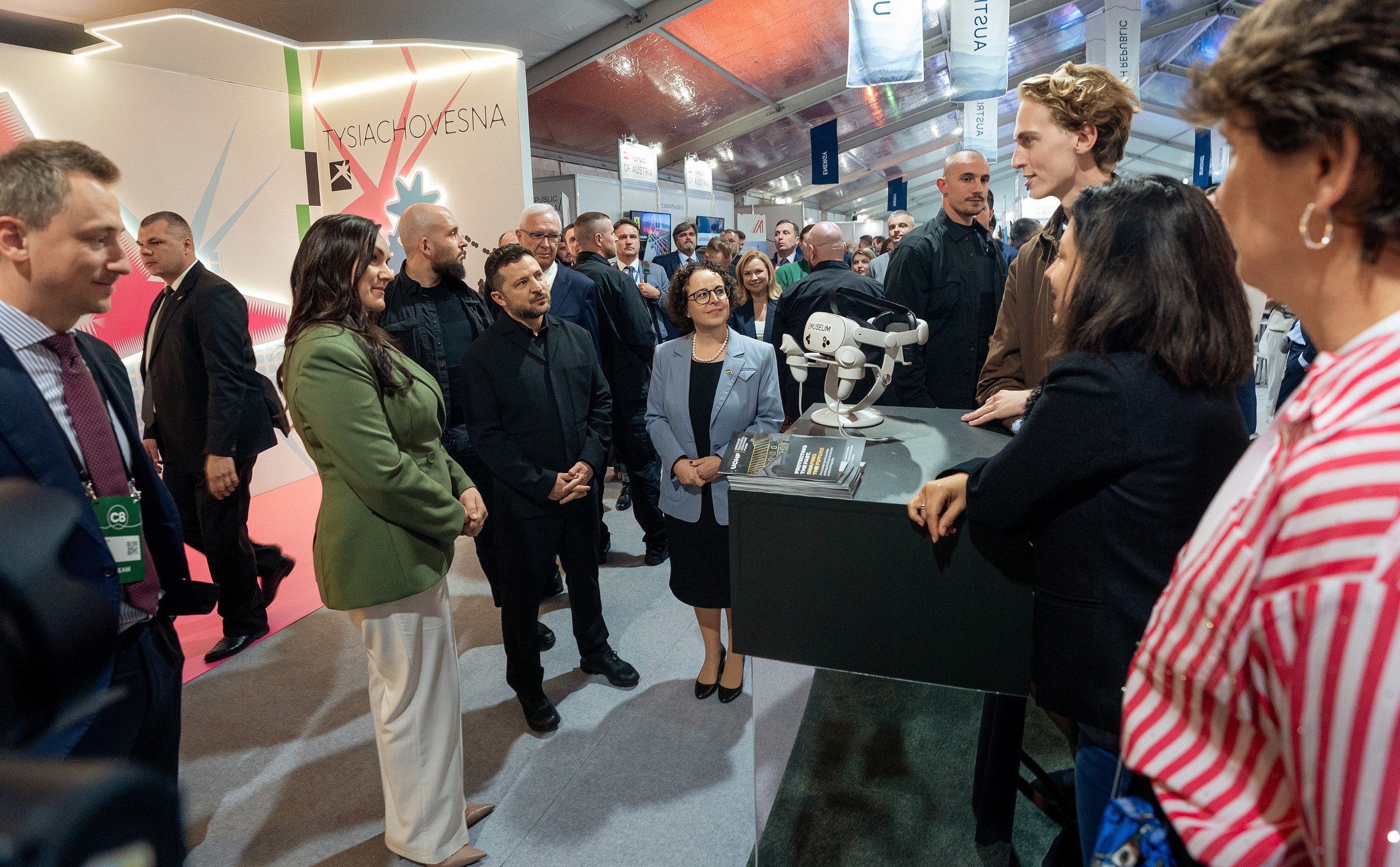
Photo courtesy of the Ukrainian Cultural Heritage Fund.
How does UCHF’s funding system work, and who are its main donors?
The Fund operates on a pooled funding model: different countries and international partners contribute to a common fund. We have a portfolio of projects and a clear understanding of what work needs to be carried out immediately after damage occurs. We also offer individual projects to donors who have specific areas of interest. Among the first countries to support the Fund were Denmark, the United Kingdom, the Netherlands, and Poland. It is particularly valuable to us that Lithuania, Latvia, and Estonia also contribute to UCHF. Denmark was one of our earliest and largest partners.
The Danish government announced a contribution of 10 million Danish kroner. All of this is more than just financial assistance. It demonstrates that our European partners understand that preserving Ukrainian culture is part of our shared responsibility for Europe’s future. It is also important to understand that the Fund is not a museum and does not restore heritage sites itself. Our task is to raise funds, identify priorities together with experts, support high-quality projects, and oversee the use of resources.
We want every donor to know how their money has been spent and every Ukrainian institution to have a fair opportunity to receive support. And, of course, we are working to expand our network of partners. After all, restoring Ukraine’s cultural heritage is not a task that can be completed within a single budget year, or even during the first few years after the war ends.
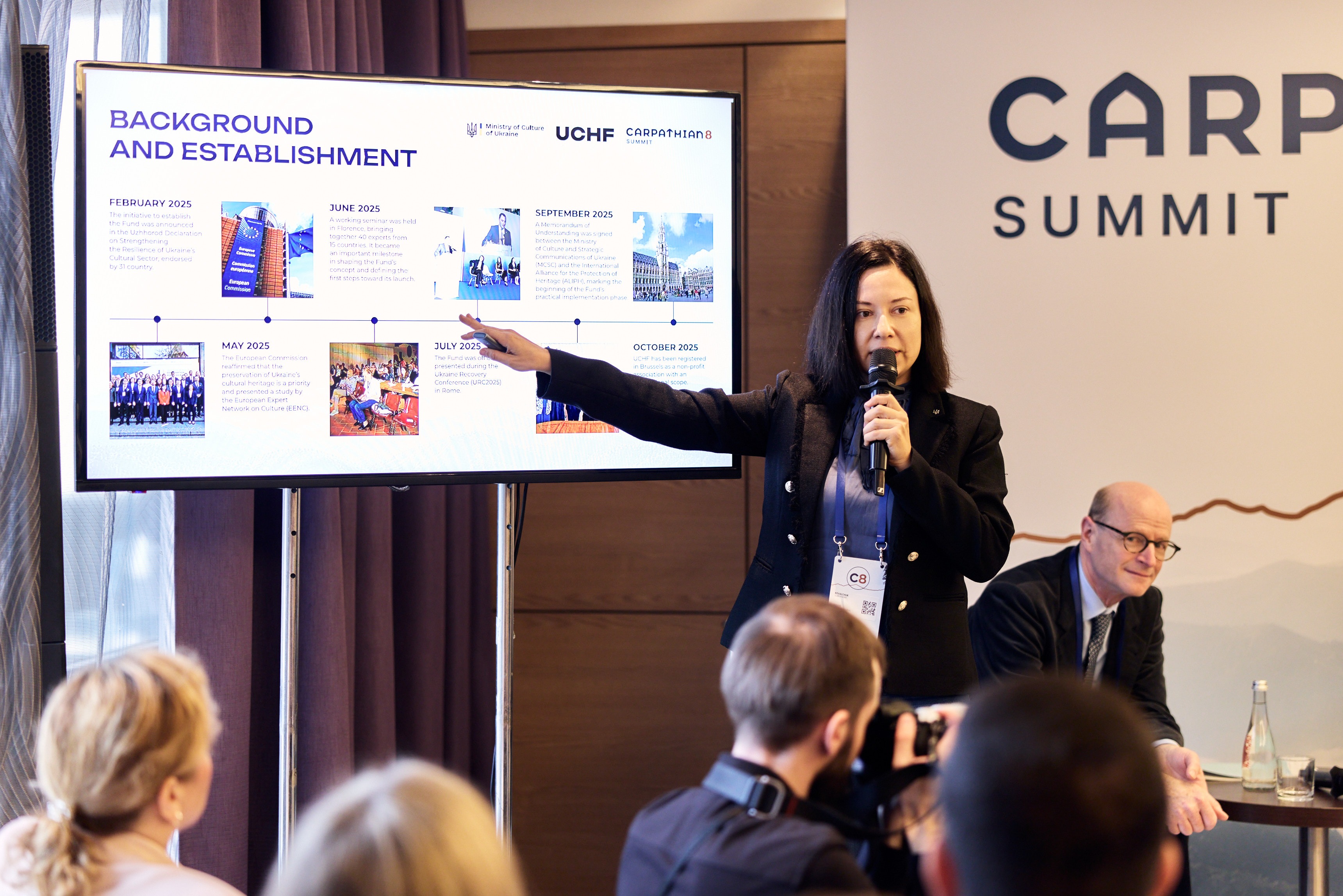
Photo courtesy of the Ukrainian Cultural Heritage Fund.
Ukrainian cultural heritage is being destroyed by Russian aggression every day. This is compounded by the longstanding underfunding of museums and other cultural institutions. The range of challenges facing your Fund is extraordinarily broad. What strategy have you developed under these circumstances, and what practical decisions are you already making?
You are absolutely right. The war did not create all the problems facing Ukrainian cultural heritage, but it has made them much more severe. Many of our museums had operated for decades in buildings that needed repairs. Collections were stored in conditions that were far from ideal. There was a shortage of conservators, and salaries in the cultural sector remained low. Now, on top of all this, we face missiles, drones, fires, occupation, and the risk of losing entire collections. There is also an enormous staffing crisis. A large part of the professional community is serving in the military, while many others have gone abroad to protect their children from the war. That is why we cannot simply draw up a list of damaged heritage sites and begin restoring them one by one. We must support the professional community, provide assistance, and strengthen the resilience of teams and local communities responsible for heritage sites. This is our most important priority, and we take it into account in every project.
Overall, our strategy includes several areas of work. The first is the emergency protection of heritage at risk, which I mentioned earlier. The second is expanding storage capacity for evacuated collections. This year, I hope we will establish more than 1,000 square metres of storage facilities. Another area is stabilization and preventive conservation: protecting damaged heritage until full restoration becomes possible. A further priority is the energy independence of cultural institutions that safeguard our heritage. We must think about what Ukrainian museums will look like after the war. I would not want us simply to restore old buildings and return to the same problems that existed before. We must use this difficult period to create a more modern and resilient cultural heritage preservation system, while strengthening the long-term sustainability of the professional community and the teams responsible for the heritage sites that the Fund will help restore.
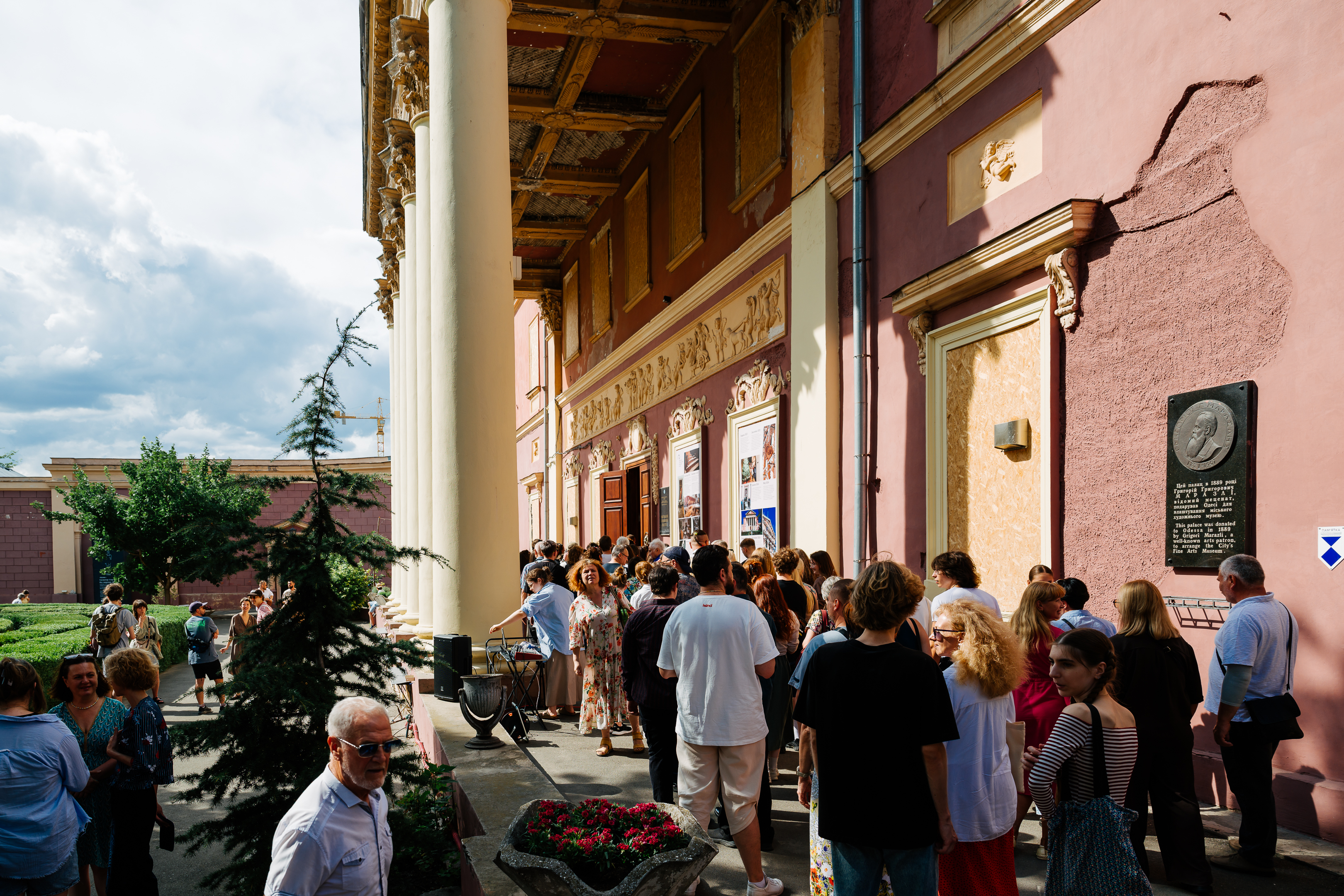
Photo courtesy of the Odesa National Fine Arts Museum.
How does UCHF work with Ukrainian museum collections and exhibits that have been evacuated abroad? For example, there is currently a legal dispute involving paintings from the collection of the Lviv Historical Museum in Poland. How can such issues be resolved?
Let me say from the outset that this activity is outside our mandate. The Fund is not an authority that resolves disputes concerning ownership rights or international museum loans. However, we see our role in supporting cooperation, professional expertise, and the creation of conditions that allow Ukrainian museums to store their collections safely. As an expert in the field, I would point out that moving collections abroad is a necessary measure, but it does not constitute evacuation in the legal sense.
We are grateful to the museums and countries that have received these works and ensured their protection. A draft law specifically regulating the evacuation of museum collections abroad is currently under consideration in the Verkhovna Rada, Ukraine’s parliament. For now, all Ukrainian museum objects located abroad are there as part of exhibition, research, or restoration projects. They were transferred abroad on the initiative of the museums themselves or their governing authorities, rather than under a nationwide programme supported by intergovernmental agreements. It is extremely important to establish clear rules that all parties understand before a collection crosses an international border.
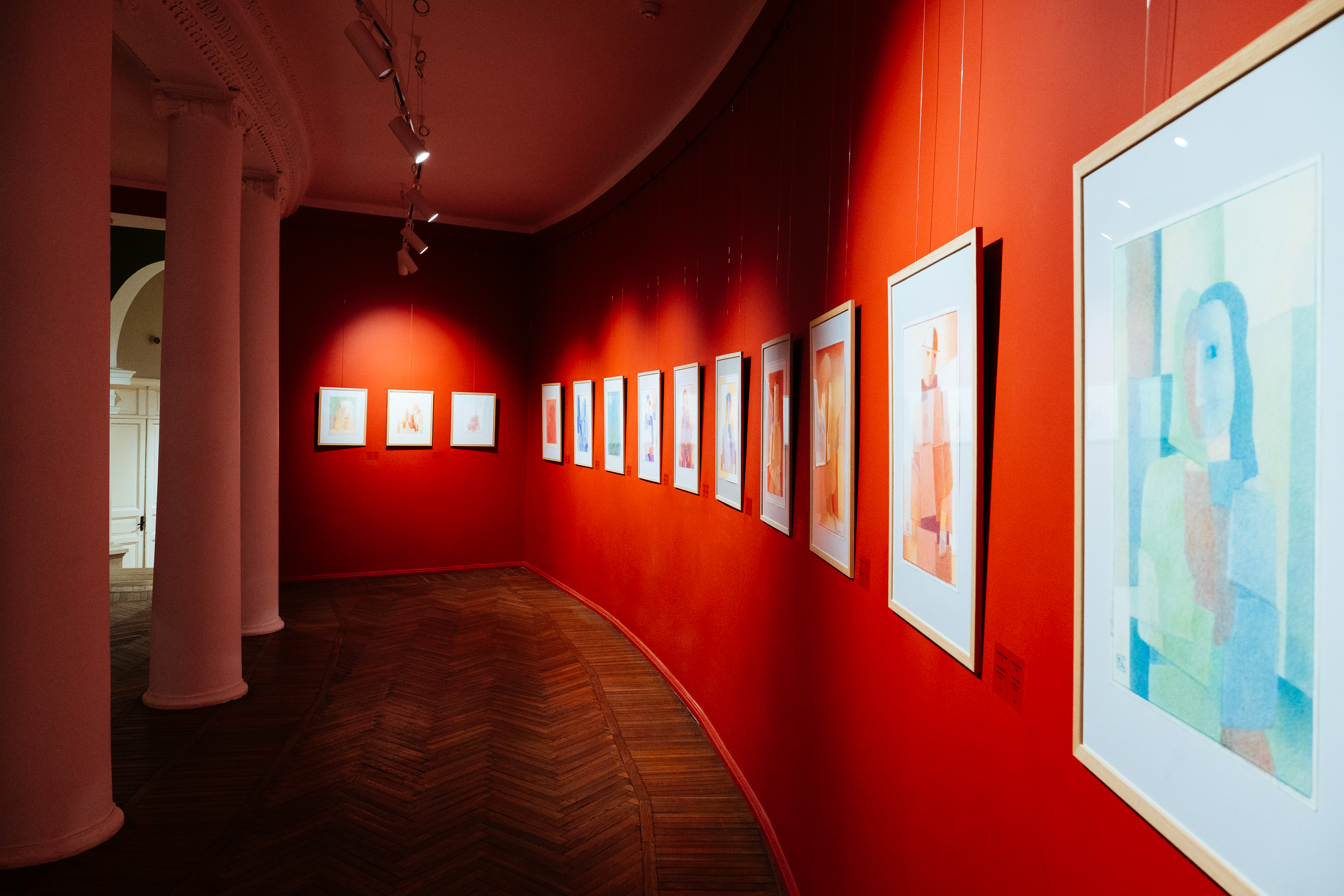
Photo courtesy of the Odesa National Fine Arts Museum.
Together with Oleksandr Roitburd, you once reformed the Odesa Fine Arts Museum and helped it obtain national museum status. Today, Odesa is among the cities most heavily affected by Russian missile attacks. What is happening at the museum and other cultural institutions in the city?
For me, the Odesa Fine Arts Museum is much more than a former workplace. It remains a major part of my life. I am proud of the museum’s team when I speak abroad about its work during the war. The people I tell about it also express tremendous respect. The museum continues to operate, although doing so under these conditions is extraordinarily difficult. It is located near the port, which makes it a high-risk location for the collection. During air raid alerts, everyone is required to go to a shelter. In November 2023, a Russian Oniks missile landed directly in front of the museum gates. The blast wave destroyed the roof of the museum’s administrative building. Yet within six weeks, the team resumed operations, and the museum has remained open continuously ever since. Last winter, we converted one of our rooms into a resilience centre, where people can come to charge their electronic devices or wait out air raid alerts. We have reorganized the museum’s operations to meet wartime requirements.
We have several generators, an EcoFlow portable power station, and solar panels that allow the museum to remain operational even during prolonged blackouts. We also keep one tonne of water in reserve so that the toilets can continue functioning when the water supply is interrupted. As you know, Russian attacks are now targeting water supply infrastructure. So, throughout these nearly five years, the museum has been constantly adapting to emerging threats. The Odesa Fine Arts Museum has 26 exhibition halls. On the first day of the full-scale invasion, the museum team dismantled the main exhibition. Since then, most of the collection has been evacuated to five different locations.
There is no completely safe place in Ukraine. Missiles can reach even the western regions of the country. Dispersing evacuated collections across different locations is therefore also part of our risk management strategy. Despite everything, in June 2022 the museum fully reopened to visitors. At that time, we organized an exhibition called “Before the War.” It presented new acquisitions made possible by Oleksandr Roitburd and the funds he had secured through his city council deputy’s fund. As a member of the Odesa City Council, Roitburd used his allocated funds to purchase new works of contemporary art for the museum. Before that, the collection had last been expanded in 1989, when the museum purchased two works by Roitburd himself. The exhibition “Before the War” occupied six halls on the ground floor. But within another six months, the entire exhibition space was functioning again: all 26 halls. We were holding several exhibitions by contemporary Ukrainian artists simultaneously.
The main directions of our exhibition programme are presenting contemporary Ukrainian art and exploring artistic reflections on wartime experiences and what we are currently going through. Another direction is researching private collections of works by Odesa’s nonconformist artists from the 1960s. A further area is art created by military personnel. It is not always of museum-level artistic quality, but these exhibitions contribute to remembrance and commemoration. It is important for us to show who is defending us. For example, I remember the beautiful watercolor flowers painted by Borys Aizenberg on ammunition boxes. He was a captain of a machine-gun unit and painted them directly on the front line in Donbas. Borys Aizenberg was killed at the front in 2023.
There is something very important that people need to understand about Ukraine. When a museum opens an exhibition during wartime, it does not mean that everything is fine or that life has returned to normal. It means that people are making enormous efforts to preserve at least some sense of normal life. And it also means that culture is not a luxury they can postpone until the war ends. They need culture right now.
Photo courtesy of the Odesa National Fine Arts Museum.
President Volodymyr Zelenskyy’s decree granting the Odesa Fine Arts Museum national status also stipulated that the institution would be named after Oleksandr Roitburd. This idea, like Roitburd himself, sparked lively debate in the city. What is your personal view on this issue?
Oleksandr Roitburd was someone who never left people indifferent. He had very clear convictions, was not afraid to express them, and often engaged in arguments and debates. His ability to ask uncomfortable questions was an essential part of his personality. I am not sure whether Oleksandr himself would have wanted the museum to bear his name. Naming institutions after prominent officials is an old Soviet practice. Back in the 1930s, the Odesa Fine Arts Museum had the name of Isaak Brodsky, one of the leading figures of official Socialist Realism, attached to its title. In Europe, this practice of naming museums after kings or presidents is no longer common, let alone naming them after former directors. And, in any case, a museum named after Roitburd that holds only three paintings by Roitburd? Although this year we acquired several more of his works for the collection. If we look at the Oleksii Shovkunenko Art Museum in Kherson, for example, we find 300 works by Shovkunenko. So personally, I do not like this custom or this approach. But…
Even during Oleksandr’s lifetime, many people would say, “Well, at Roitburd’s museum…” or “Let’s go to Roitburd’s museum.” Within the artistic community, the idea of “Roitburd’s museum” had already become firmly established. And now, during the war, Roitburd has become a symbol of resistance, intellect, humour, and flexibility for Odesa and beyond. By naming the museum after him, we would extend the memory of him and preserve his connection to the institution. At least until we come to realize that we do not necessarily have to carry the old Soviet tradition of naming institutions after individuals into the future.
If we set aside my admiration for Roitburd and my affection for him as an important mentor figure in my life, and look objectively at the history of the Odesa Fine Arts Museum, we will find many directors who made equally significant contributions. The museum experienced periods of decline, followed by the arrival of talented directors who accomplished many important things. Of all the directors in our museum’s history, I would single out Ivan Semeniuk, who led the institution from 1972 to 1979. In terms of the sheer scale of his achievements, what he did for the museum’s development was far greater than what Oleksandr Roitburd and I accomplished. Semeniuk tripled the museum’s staff, arranged alternative housing for people who had been living on the museum premises, developed its scientific and research capacity, and established a proper system of guided tours and visitor services. He expanded the exhibition halls, and the museum participated in international exhibitions. It was Semeniuk who laid the foundations for the Odesa Fine Arts Museum’s substantial institutional growth. Unfortunately, Oleksandr Roitburd did not have enough time to accomplish everything he had planned. From the very beginning of his tenure, we realized that the museum needed a new location. He reached an agreement with Minister of Culture Oleksandr Tkachenko that we would receive the KINAP complex, a former large film equipment factory in Odesa. It is a fantastic building in a beautiful location in the Slobidka district. It was a wonderful project for the regeneration and gentrification of an industrial neighbourhood, but the full-scale war brought it to a halt.