
Valdone Rudenkiene/Tie2.lt
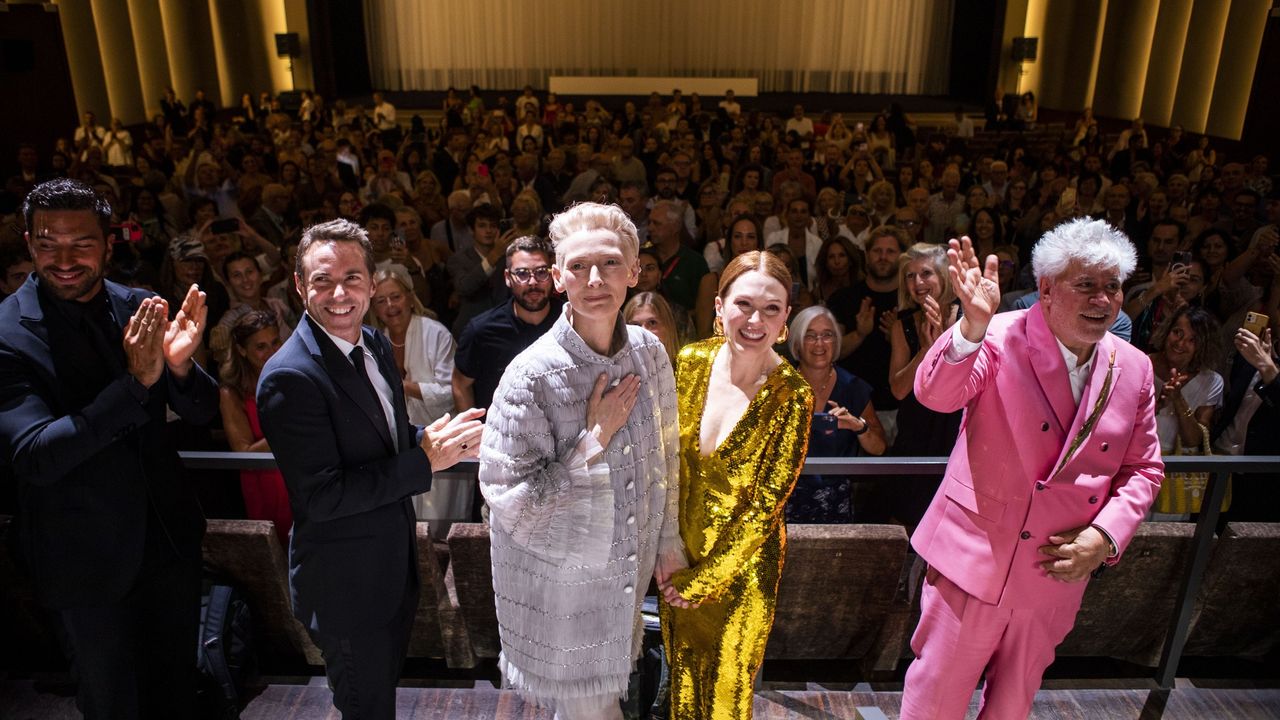
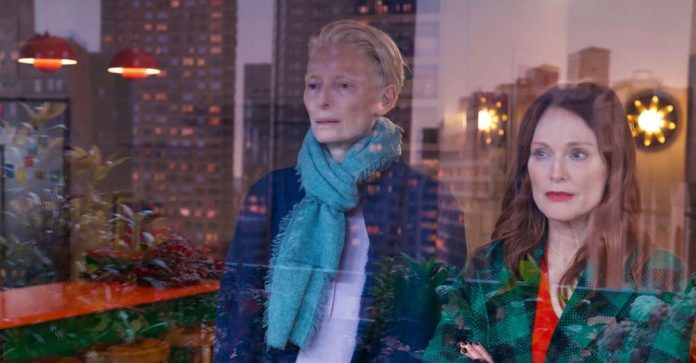
Premiering at the Venice Film Festival to much anticipation and a warm reception, Pedro Almodóvar’s The Room Next Door is the director’s first film in English. The presence of acclaimed actresses Julianne Moore and Tilda Swinton undoubtedly adds further weight to the film. Their characters, Ingrid (Moore) and Martha (Swinton), are two old friends who worked as journalists for the same New York magazine in the 1980s. Ingrid became a writer, with her latest book focusing on the fear of death. Meanwhile, Martha was a fearless war correspondent for many years. They lost touch a few years ago, but when Ingrid learns that Martha is undergoing treatment for cervical cancer in a Manhattan hospital, she rushes to be by her side. Soon, their friendship rekindles as closely as before. Their bond grows so strong that the dangerously pale and exhausted Martha asks Ingrid for a huge favor. She purchases an euthanasia pill from the dark web but doesn’t want to be alone when she takes it. So, she asks Ingrid to stay in the next room.
The story is captivating, the cinematography and aesthetics are excellent, featuring Pedro’s signature use of colors, and, of course, Moore and Swinton’s performances are impeccable. Behind the scenes, critics have already begun whispering that this film might be one of the festival’s favorites.
What else were critics discussing after the screening? Naturally, they pondered what the film is truly about and, more importantly, why. At 74 years old, Almodóvar is clearly contemplating mortality more often. The Room Next Door is not a deeply philosophical piece—though mature, it still contains playful humor and vibrant melodrama. However, the film evolves into a warm and heartfelt reflection on aging, death, and the importance of finding joy even in the most hopeless situations. Films dealing with such themes, in any language, are rare. As always, Pedro remains original.
If you’re familiar with Almodóvar’s films, you’ll instantly recognize his distinctive style: no other director uses such vivid shades of green, red, yellow, and blue quite like he does. Thus, even though the film’s setting is primarily in and around New York, there is still plenty of Spain within it. That said, if you didn’t know better, you might think Woody Allen had a hand in its making. After all, it is a talkative drama about cultured, comfortably living New Yorkers who stroll through parks discussing love, life, sex, and death. The comparison is unavoidable.
English-speaking colleagues noted that some lines would have sounded much better in Spanish, as the direct translations from Almodóvar’s native language occasionally came off as somewhat simplistic. But this can be forgiven—it is, after all, Pedro’s first film in English. Some might also criticize certain scenes as being a bit slow, particularly at the beginning. Still, the film’s dialogue-driven nature, featuring just two actresses, ensures that boredom never truly sets in. Moore, in particular, masterfully delivers lines that might have sounded too grandiose from another actor’s lips, but by infusing her voice with tension and uncertainty, she makes them feel natural. As for some critics’ claim that this is nothing more than a two-person play from a small-budget Broadway production simply adapted for the screen—that seems overly harsh. The dialogues are so compelling that they not only demand to be heard but also truly understood.
Though the film starts somewhat quietly, depicting the ordinary lives of New Yorkers, it gradually becomes more engaging—especially once the characters leave the city. Martha rents an expensive, stylish house in the mountains for a month-long “vacation,” and as her final day on Earth approaches, her friendship with Ingrid grows even warmer, happier, and more meaningful. Life flows as it always does, people go about their routines, and if one didn’t know that someone’s life was about to end, there would be no tension—only an appreciation of the film’s many beautiful visuals.
“When it happens, my door will be closed, and you will understand,” Martha warns Ingrid. But in the end, things turned out differently. Much brighter, much more colorful. And death did not seem so frightening—at least not in this Pedro Almodóvar film.